|
Department of Atmospheric and Oceanic Science
Professor, AOSC Full CV as file.doc
|
|
Prof. Dickerson's research focuses on the multidisciplinary areas of atmospheric chemistry and air pollution, specifically photochemistry and global biogeochemical cycles. His research group, composed of chemists and meteorologists, develops analytical instruments (for NO, NOx, NOy, NH3, CO, SO2, and aerosols), employs these instruments in the laboratory, field, and on ships and aircraft, and interprets the results in terms of photochemistry and atmospheric physics. They are studying the budget of tropospheric ozone both in the Baltimore-Washington area (check the Ozone Forecast) and on the large scale, the transport of trace gases in convective clouds, and the role of the atmosphere in the chemistry of the Chesapeake Bay. Observations are compared to calculations from computer models of clouds and chemistry. Prof. Dickerson was a member of the Center for Clouds, Chemistry and Climate (C4). Aboard the NOAA Research Vessel Ronald H. Brown he and members of his group measured the gradient of atmospheric trace species across the equator in the Indian Ocean. He is also a member of the Earth System Science Interdisciplinary Center (ESSIC), which facilitates collaboration with NASA/GSCF and NOAA/ARL. Prof. Dickerson heads the Regional Atmospheric Measurement Modeling and Prediction Program, RAMMPP. Before coming to Maryland, Prof. Dickerson worked at the National Center for Atmospheric Research and at the Max Planck Institute for Chemistry, in Mainz, Germany. |
Teaching
Close Colleagues
Current Students
Previous Students
INDOEX
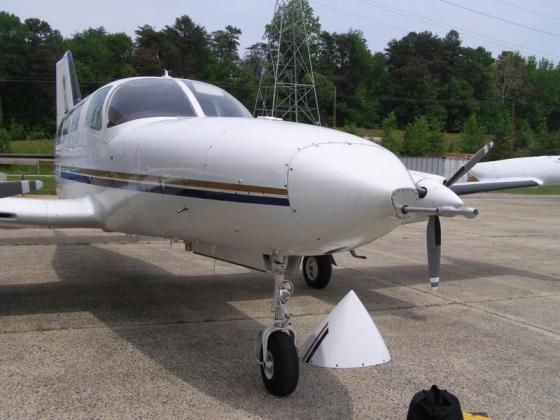
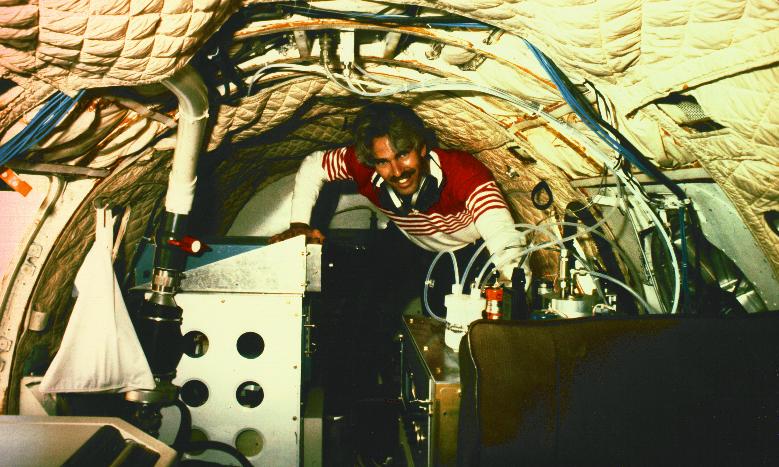
Here are some pictures of the research platforms we've used.
NOAA Research Vessel Ronald Brown
used in INDOEX, 1999.
Piper Aztec used in RAMMPP.
Governor O'Malley asked for a report on Global Warming: Governor. Find the report here:Global Warming and the Free State
Our research is supported by NSF, NOAA (see also CICS), EPA, NASA, EPRI, the Maryland Departments of the Environment MDE and Natural Resources.